
It’s been a while since my last post.
I recently returned from a much needed holiday with my family, one where I originally thought I might get some writing done but I didn’t really feel the pull to do so. Instead, I spent some time reflecting on my own growth and how this was likely the first summer holiday where I haven’t spent much of the time decompressing or dreaming up new program ideas for the field in which I work. For a long time, even when I was away from work, my brain never really stopped working. I was always thinking about the next thing, the next program, or another way we could do something differently or better. I don’t necessarily think that was a bad thing because I genuinely love the work that I do, but I’m starting to realize that there is something to be said for being able to step away from it too. I think sometimes we don’t recognize how much we carry until we finally put it down for a little while.
My first day back at work was a busy one as I caught up on my patients and had an intermission to chair our City of Duncan Committee of the Whole meeting where we discussed permissive tax exemptions, then back to work to finish my day doing wound care and whatnot, followed by returning to Council Chambers for our regular Council meeting until about 8:30pm before returning home to finish up the closing shift at home before getting into bed. It was a long day, but somewhere in the middle of all of it I found myself thinking about how much my perspective has changed over the past eight years. I am so grateful to have had the ability over these past 8 years to learn about municipal governance and add that to my repertoire of knowledge, allowing me a wider lens to do the work I do and to look at the community we all live in. So often I see people, both in my work and at Council, who don’t have the ability to see things from both sides, and I don’t necessarily mean that as a criticism. I think it is actually really difficult for any of us to step outside of our own experiences and see something from someone else’s perspective.
One of the topics that has been coming up a lot recently is the increase in foot traffic in and around the new supportive housing facility on White Road. Neighbours around the site are not happy with the influx of unhoused people hanging around the neighbourhood, and those complaints tend to fall on the City because people believe that to be a City project. It isn’t. But even putting that aside, I don’t think the neighbours are wrong to be concerned with some of what they are experiencing. People loitering for long periods of time, using substances openly in their neighbourhood, blocking sidewalks or taking up a large portion of a parking lot can have a very real impact on the people who live and work there. At the same time, there is a difference between someone sitting on a bench intended for sitting and someone creating an actual obstruction or disruption. I don’t think those two things have to be mutually exclusive. People can have legitimate concerns about what is happening in their neighbourhood and still recognize that the people they are concerned about are human beings who are struggling.
It’s hard for us, as a society, to see human beings in the poor and desperate conditions they are in, so out there in the public eye for all to see. People splayed out on sidewalks for long periods of time, people passing by wondering if they’re dead or alive…it’s such a bizarre concept to think about living in this beautiful province and community we call home, isn’t it? No one wants to see people suffering at every turn. It makes us uncomfortable, and that discomfort often comes out in ways we don’t expect. Some people have become so desensitized to seeing this that they forget that these are our fellow community members, they are someone’s son or daughter, mother or father. They have families and people who love them, people who worry about them and people who remember them as the person they were before their lives became what we see today.
When we lose sight of that, we also stop thinking about the impact that taking a video or picture and posting it online might have on that person’s family. I think about this sometimes when I see pictures posted online of people who are clearly struggling. Somewhere there may be a mother sitting at home grieving the loss of her son or daughter, and that person’s worst moments are now being shared publicly by strangers. We don’t know their story, what happened before that moment, or who they were before addiction, homelessness or whatever else brought them to where they are. We single out particular people and blame them for what we’re seeing because it’s easier to point fingers and place blame when we’re feeling uncomfortable and angry. To be honest, it’s easier to blame a single person or organization rather than stepping back and taking a real look at the issues our society is and has been facing for years and recognizing that what we are seeing today is the result of many complicated things coming together. There is no one person or organization that created the housing crisis, the toxic drug crisis, poverty, mental health challenges or the many other factors that have brought us to where we are today, and there certainly isn’t one person or organization that is going to fix them.
I read people’s comments online all the time and feel embarrassed for them, and while I generally don’t respond to those comments to save my own mental health, I also know that those folks generally don’t have the capacity to hear my point of view. At the same time, I know that they are making those comments and portraying themselves that way for a reason. The ability to see this in people, to understand that we all see the world through the lens of our own experiences, is one of the reasons I think I am good at the work I do. I have spent years sitting with people whose lives look completely different from mine, trying to understand what brought them to where they are. I don’t have to have lived their life to recognize that their experiences have shaped how they see the world.
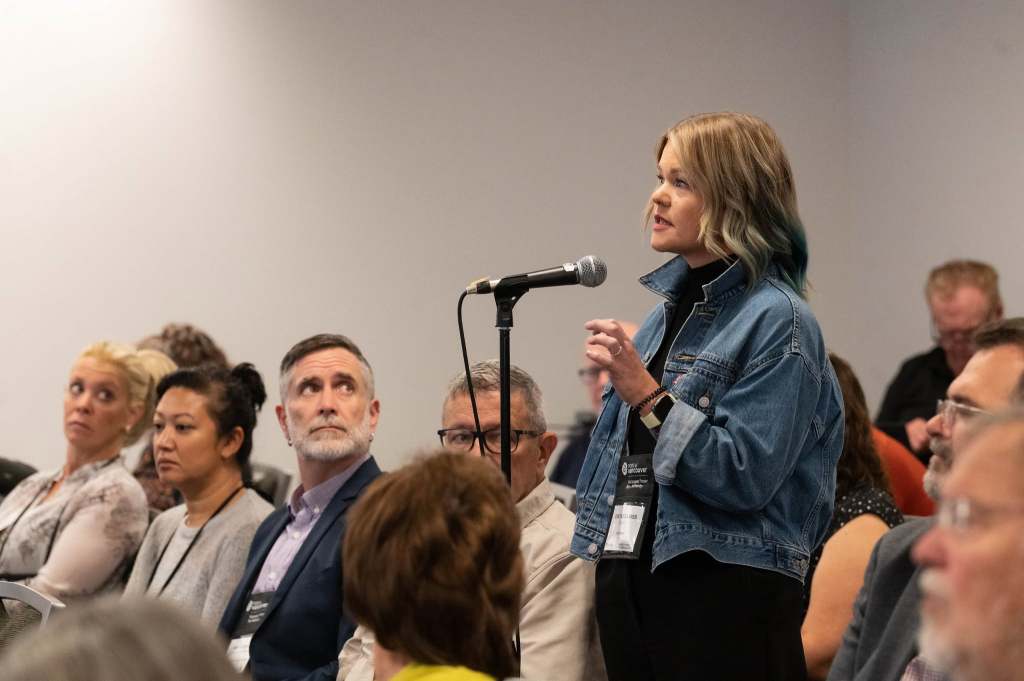
I think my time on Council has taught me something very similar, just from the other side. I have sat across from people who are angry, frustrated, scared and disappointed. Sometimes I agree with them and sometimes I don’t, but I’ve learned that listening to someone doesn’t mean you are agreeing with them. Sometimes it simply means you are willing to acknowledge that their experience is real, even if your own experience is very different. A business owner who has dealt with repeated theft or vandalism is going to experience homelessness differently than someone who has never had to deal with those things. A neighbour who has watched people use substances outside their home is going to experience supportive housing differently than someone who works in the system. And a person who has spent years experiencing homelessness, trauma, addiction and poverty is going to experience the world very differently than someone who has always had a safe home, a stable income and people to rely on. None of those perspectives mean that one person is necessarily right and another is wrong.
I think that is something that has become increasingly important to me over the years. Understanding someone’s perspective doesn’t mean we have to agree with them. It doesn’t mean that behaviours shouldn’t have boundaries or that people shouldn’t be accountable for how their actions affect others. It simply means that we can understand where someone is coming from without deciding that they are a bad person because their experience is different from ours. We can acknowledge that a neighbour is frustrated while also recognizing that the person they are frustrated with may be struggling in ways we cannot see. We can want better for our community without deciding that the people who are struggling in it are the problem.
Maybe that is what having a wider lens really means. Not that we suddenly understand everything or that we can see every issue from every possible perspective, but that we become a little more willing to step outside of our own experience and recognize that there is usually more to the story than what we can see standing in front of us. I think that is something I am still learning.
I think maybe that is what this season of my life has been about for me. Looking back a little more than I used to, not necessarily because I’m done moving forward, but because I’m finally able to appreciate some of the distance I’ve travelled. For a long time I was always looking ahead to what was next, what I could learn, what I could change, what I could build or what I could do differently. I didn’t spend a lot of time looking back because there was always something else that needed to be done. But maybe there is value in looking back sometimes, not to dwell on the past, but to recognize that all of those experiences, the good ones and the really difficult ones, have shaped the way I see the world today.
When I think about the different roles I have had over the years, the nurse, the colleague, the manager, the mother, the wife, the community member, the person who sat around a Council table and the person who sat beside someone on the worst day of their life, they can sometimes feel like very different parts of my life. But I think they have all taught me something about people, about perspective and about myself. Maybe none of those experiences were really separate chapters at all. Maybe they were all just part of the same story, and I’m finally starting to see how they fit together.
I don’t know exactly what the next chapter looks like, and for once I’m not sure I need to. I think I’m learning to be a little more comfortable with not having all the answers, with understanding that I can care deeply without carrying everything, and with recognizing that growth doesn’t always look like doing more. Sometimes it looks like finally being able to stop, look around, and realize that you have already come a pretty long way.





Leave a Reply