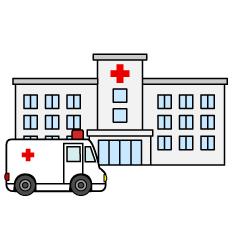
I received an email from CBC this week asking for an interview regarding the recent announcement by the BC government that they would not be considering turning the old Cowichan District Hospital into a mental health facility once the new hospital opens next year. They explained that they were reaching out because of my somewhat unique perspective, being both someone who works in mental health and substance use and someone who sits on city council.
I chose not to participate in the interview for a number of reasons. It gets messy when your professional and elected roles overlap and, over the past eight years on council, I have worked hard to maintain boundaries between the two. While my job gives me insight into some of the struggles our community is facing, it is not my role within Island Health to publicly speak on behalf of the organization or its services. And, if I’m being honest, interviews don’t always leave much room for nuance. When you’re talking about issues this complex, there is only so much that can be captured in a short segment, and you have very little control over which pieces of the conversation ultimately make it to air.
That being said, the invitation did leave me wondering what my own thoughts are on the matter.
From the beginning, one of the biggest questions for me has been staffing. We already know that healthcare, mental health, and substance use services are struggling to recruit and retain workers. If another facility were opened, where would those staff come from? At the same time, I can certainly appreciate the advantages of having services located together. A large building like the old hospital could potentially allow many mental health and substance use programs to operate under one roof, creating opportunities for greater collaboration and easier access to care.
Part of me sees the potential in a facility like this, and part of me wonders whether we are overlooking larger gaps in the system.
I also know, from my years on council, that decisions like this are rarely as straightforward as they appear from the outside. There are often countless variables that the public is not aware of, and sometimes information that cannot be shared for legal, financial, or operational reasons. It is easy to look at an empty building and see possibility, but much harder to understand everything that goes into determining whether that possibility is realistic.
What has stood out to me most, however, is the public response. Reading comments online and listening to discussions on the radio, I get the sense that many people see this proposed facility as the answer to many of the challenges our community is facing. What is less clear to me is exactly what people imagined this facility would be. Were they hoping for detox beds? Long-term treatment? Psychiatric care? Supportive housing? Some combination of all of those things?
The reality is that those are very different services requiring different staff, different funding models, and different approaches. We often talk about homelessness, addiction, and mental illness as though they are all the same problem affecting the same group of people, but that simply is not the case. Some people are living with severe and persistent mental illness. Some are struggling with substance use disorders. Others are dealing with brain injuries, trauma, poverty, or social isolation. Many are carrying all of those burdens at once.
Another piece that I think often gets missed in these conversations is the level of expertise required to support people with these complex needs. We are asking systems that are already stretched thin to respond to individuals who may be living with addiction, severe mental illness, acquired brain injuries, chronic health conditions, and extreme poverty, often all at the same time.
This is not a criticism of the people doing the work. In fact, I think many front-line workers are carrying far more responsibility than they were ever trained or supported to take on. We have created systems where staff are often expected to navigate incredibly complex human problems with limited resources, inconsistent support, and varying levels of education and experience. In some cases, services are being asked to manage situations that would challenge even highly specialized teams.
It is easy to point to an empty building and assume that opening another facility will solve the problem, but a building does not automatically create a workforce with the knowledge, training, and support needed to provide that care.
People tend to believe that the solution to this crisis is as simple as opening a detox or treatment centre, and I completely understand why. Families are desperate. Front-line workers are exhausted. It is heartbreaking to watch a community you grew up in change so dramatically and to see people living in tents, struggling with addiction, or falling through the cracks of an already stretched system.
I also want to be clear that treatment absolutely changes and saves lives. I have seen people access treatment, reconnect with their families, find housing, return to work, and build lives they never thought possible. Those successes matter and they deserve investment and support.
What I have learned over the years, though, is that there is rarely a single answer to a problem with so many causes. Treatment helps some people. Supportive housing helps others. Outreach, primary care, mental health services, and community connections all play important roles as well. None of these interventions, on their own, will solve what we are seeing.
Working in this field has taught me to be cautious of anyone who claims to have “the answer.” I have watched people recover in ways no one expected, and I have watched others cycle through every service available to them without finding what they need. I have sat in council chambers discussing policy and budgets and then gone to work the next morning and seen the human side of those decisions playing out in real time.
I do not know whether the old hospital was the right place for a new facility, and I suspect most people, myself included, do not have enough information to answer that question fully. What I do know is that the challenges we are facing did not develop overnight, and they will not be solved overnight either. My hope is that we can move beyond looking for a single solution and start having more honest conversations about the complexity of what our communities are experiencing and what it will actually take to support people moving forward.





Leave a Reply