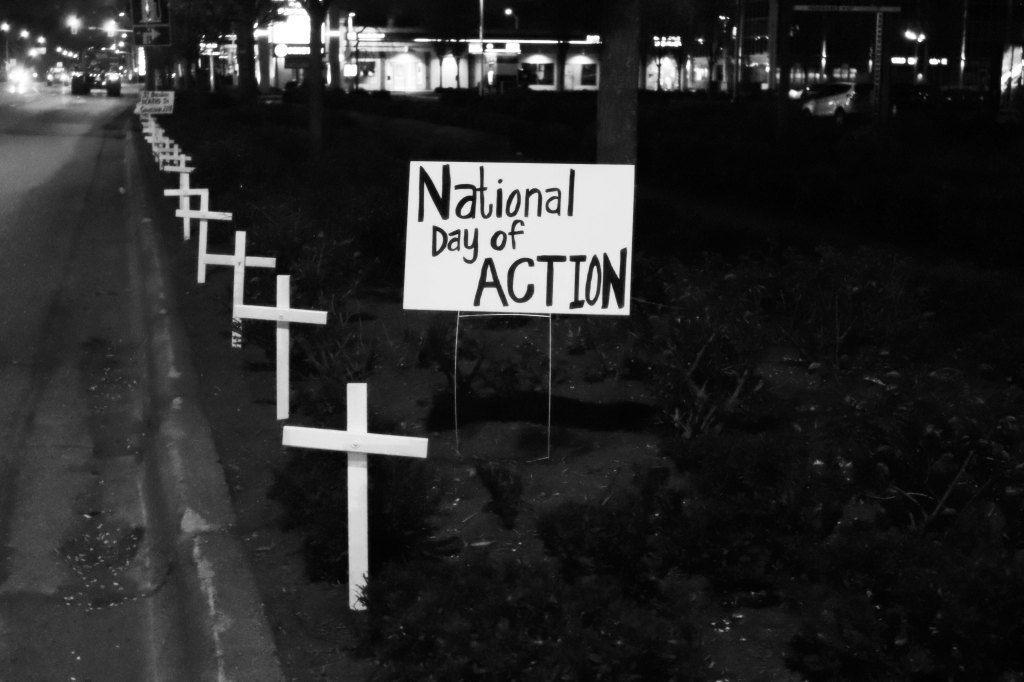
It’s been 10 years since the opioid crisis was declared a public health emergency. I remember when that language first started being used, emergency. It implied urgency.
At the time, I believed it.
I thought it marked a turning point. That systems would respond in a way that matched the scale of what was happening. That we would get it under control.
We didn’t.
When I first stepped into this work, I knew very little about substance use. What I did have was time, and a willingness to listen. I spent years learning directly from people, watching, asking, trying to understand what was actually happening beneath the surface. Then trying, in my own way, to translate that reality for others.
Some of those stories will make their way here.
A lot has changed over the past decade, much of it accelerated during COVID, when barriers were lowered out of necessity. We now have more services, more awareness, and more open conversation. Overdose prevention sites. Expanded access to opioid agonist therapy. Safer supply programs. Heck, I can even prescribe some medications as a nurse!
On paper, the response is stronger than it has ever been.
But the outcomes don’t reflect that.
After a decade on the frontlines, this has never felt like a single moment in time. It has felt continuous. The crisis shows up in obvious ways, but also in quieter ones: cognitive decline, worsening mobility, vision loss, and the slow erosion of stability in people you’ve known for years.
At the same time, there is resilience that rarely gets acknowledged. People keep showing up. They build relationships. They try to engage in care, even when the conditions around them make that incredibly difficult to sustain.
That reality doesn’t make it into reports, but it is constant.
It has also been meaningful to witness slow, incremental change, progress that often goes unnoticed. The truth is, many people don’t stay in the trenches of this work long enough to see it. It asks too much of the heart.
What has become constant, though, is loss.
Over time, loss has shifted from something unexpected to something anticipated. Sometimes it follows a long period of decline. Other times it happens suddenly. Either way, it has become embedded in the work in a way that is difficult to explain.
Over the years, I’ve kept a personal record to remember those who are no longer here. It’s not complete, people move, lose contact, or fall out of systems, but it reflects what I’ve witnessed in my own practice.
There are 147 people on that list. Seventeen have died in 2026, and it is only April.
These are people I knew. People whose stories I carry. People who have changed me.
Early in the crisis, the focus was on preventing overdose deaths. That focus was necessary, and still is. But ten years in, the situation has changed. People are surviving overdoses at higher rates, yet many are not experiencing improvements in overall health or stability. The drug supply is increasingly toxic and unpredictable, and the health complications are more severe and more complex to manage.
The baseline has shifted. What once would have been considered a crisis is now routine.
We have built systems to respond, but the presence of services does not always translate into meaningful access. Navigating care remains difficult, especially for those living with instability, substance use, and complex health needs. Engagement isn’t just about availability. It’s about whether care can realistically fit into someone’s life.
Ten years after the emergency was declared, it is hard to say we are meaningfully closer to resolution. There has been effort, adaptation, and investment. At the same time, there has been a gradual normalization of conditions that, a decade ago, would have been unacceptable.
There is no clear endpoint.
What remains is the work, ongoing relationships, ongoing care, and ongoing effort to meet people where they are, even as that continues to shift.
I used to spend a lot of energy trying to change the world. Now I focus on the work in front of me.
That’s where change actually happens.
There isn’t room to do this work at full capacity and fight a system that is decades behind. So instead, I focus on changing the system by doing.
This is not a crisis that was declared 10 years ago and is now being resolved.
It is something people are still living through, every single day, whether we choose to see it or not.




Leave a Reply